














































FractionalOwnershipAruba.com · Practical guide
Plan the exit before agreeing to the entry

A fractional interest may be easier to buy than to leave. Before discussing a preferred holiday, investigate what happens if your circumstances change. This guide presents questions for comparing arrangements; it does not claim a market exists for a particular interest, promise resale liquidity or estimate a future price. A documented exit process is not the same thing as a willing buyer.
Identify what can be transferred
Start with the legal interest described in the acquisition documents. Ask whether that same interest can be sold, gifted, inherited or surrendered, and under what conditions. A statement that an interest is transferable does not explain approval rights, restrictions or costs. Obtain the actual transfer clause and ask an independent adviser to explain it.
Where an entity or contract sits between the participant and the property, ask which document controls a transfer of the participant’s interest. Do not assume that rules for a direct property transfer automatically answer a share transfer or use-right assignment. Your research should identify the issue rather than provide its own legal classification.
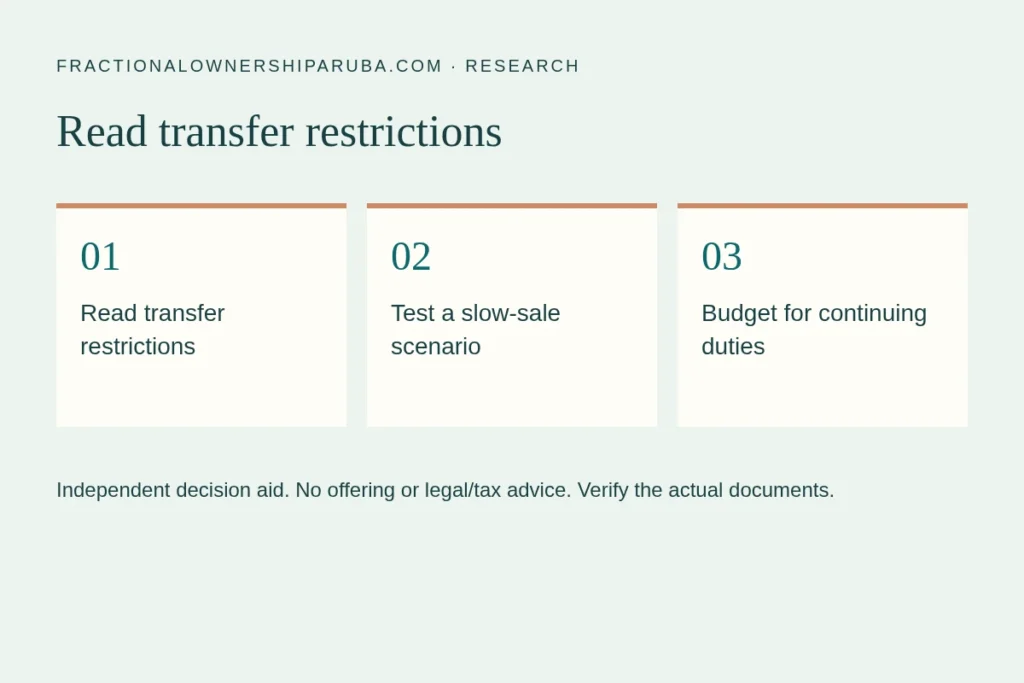
Test the approval and valuation process
Ask whether an existing participant, manager or other party has a first refusal, approval right or ability to nominate a buyer. Record time limits, notice requirements and the consequence of silence. Ask who determines price if the documents refer to a formula, valuation or mandatory sale. Understand who pays for independent valuation and what happens when parties disagree.
Request evidence for any resale claim. Completed comparable transactions, current offers and asking prices are different kinds of information. A hypothetical illustration of appreciation is not evidence of a realizable price. Keep promotional forecasts separate from independently reviewed facts and avoid building a personal budget around an unverified exit value.
Run a slow-exit scenario
Imagine you cannot find a buyer for a prolonged period. Ask which charges, insurance obligations and other responsibilities continue. Can you stop using the accommodation without stopping payment? Can you appoint someone to manage your interest, and what restrictions apply? This is an educational stress test, not a prediction about demand.
Then ask what happens if you need to leave because of illness, changed travel needs or financial pressure. Are hardship, surrender or buyback provisions available in the actual contract? If a buyback is mentioned, investigate who has the obligation, what conditions apply and what supports their ability to perform. Do not treat an optional policy as a guaranteed remedy.
Consider disagreement and life events
Ask your adviser about death, incapacity, separation and insolvency as they relate to the actual interest. Identify which documents your family or representative would need and whether more than one jurisdiction is involved. A shared holiday arrangement can create responsibilities that continue beyond a participant’s original plans.
Review dispute procedures, governing law, notice addresses and possible costs. Ask about the relationship between a contractual dispute process and available legal rights. The linked professional sources provide routes for further investigation, not advice on a dispute or an endorsement of any arrangement. Obtain your own advice before signing a restriction you do not understand.
Use exit rules in the original comparison
Compare arrangements using the structure framework and record exit charges on your cost sheet. Include the possibility of no sale and continuing obligations. Keep written answers and the exact document versions reviewed. A practical decision may be to seek a simpler use arrangement, continue researching or not proceed. The aim is informed comparison, not persuading the reader that ownership is preferable.
Primary sources and further checks
These sources provide official or first-party context, not approval of a fractional product. Confirm current rules and their application with the responsible authority or your independently engaged adviser. A linked provider is not a site partner or endorsement.
Editorial review: 5 November 2026. Educational information only; not an offering, legal opinion, tax advice or return forecast. Verify the actual arrangement independently.